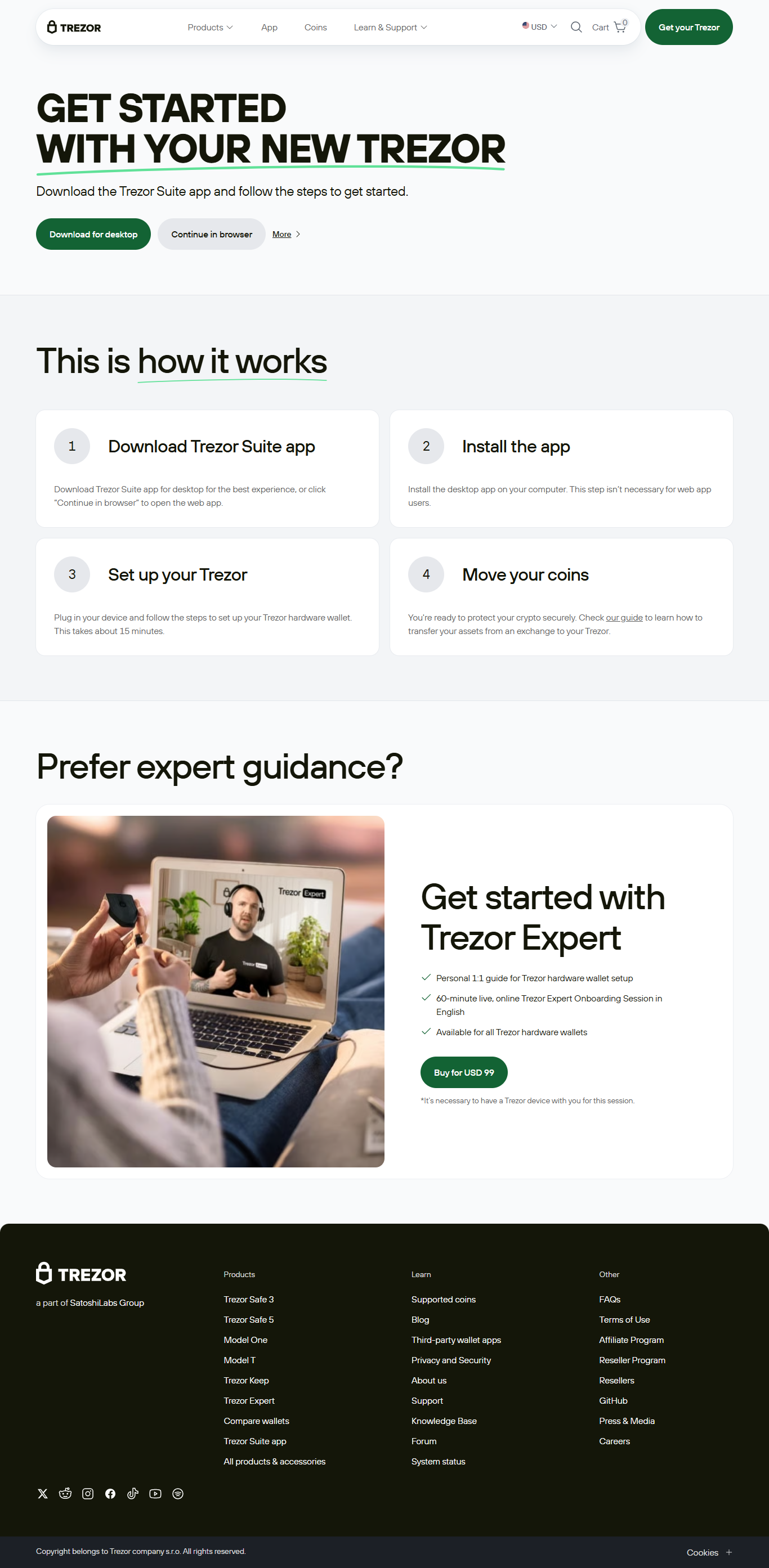
Hey there, crypto newbie! If you're dipping your toes into the world of digital assets for the first time, congratulations—you're taking a smart step toward financial independence. Setting up your first hardware wallet with Trezor.io/start isn't just about storing coins; it's about gaining control over your assets in a secure, user-friendly way. As someone who's guided countless beginners through this process (and secured my own portfolio with Trezor for years), I can tell you it's straightforward, even if tech isn't your forte.
This guide draws directly from official Trezor resources to ensure you're following trusted steps.
Trezor isn't just a device—it's your gateway to being your own bank. With Trezor Suite (the software that powers your setup), you can manage a wide array of altcoins like Ethereum, Litecoin, and even niche tokens. Want to dip into DeFi? Seamlessly connect to dApps for yield farming or NFT trading without exposing your private keys. Plus, its offline seed phrase storage keeps your funds safe from hacks, and the mobile app turns your phone into a portable crypto hub. It's perfect for beginners who prioritize security without sacrificing ease.
Grab your Trezor device (like the popular Safe 3), a USB cable, and those recovery seed cards from the box. We'll use Trezor Suite on your computer or mobile—it's free and cross-platform. Head to trezor.io/start to kick things off. Here's how:
This creates your Trezor recovery phrase, the 12- or 20-word master key to your funds.
For advanced users, enable a passphrase in Suite settings. It creates "plausible deniability" wallets—great for high-stakes DeFi plays.
You're set! Send a test transaction from an exchange to verify.
Once set up, Trezor Suite shines. How to use Trezor.io/start daily? The dashboard shows balances across 1,000+ altcoins. Receive by sharing addresses, sign transactions offline for safety. For DeFi, connect to dApps like Uniswap via Suite's Ethereum account—approve on-device to keep keys cold. It's your all-in-one DeFi wallet without the risks.
Download the Trezor Suite mobile app for iOS/Android. Pair via Bluetooth for wireless management—perfect as a mobile crypto wallet for checking balances or quick swaps.
While Suite is desktop/mobile-focused, use the WebUSB bridge in Chrome for browser-based dApp connections. Install from the Chrome Web Store and link your device for seamless Ethereum interactions.
Got a software wallet elsewhere? In Suite, choose "Recover wallet" during setup (or wipe and recover later). Enter your old recovery phrase on-device—never in the app. Transfer small amounts first to test. For non-Trezor seeds, create a new one and migrate funds securely.
Trezor.io/start is the official gateway to initializing your device securely. It guides you through firmware, wallet creation, and backups, ensuring you're protected from day one—ideal for beginners managing altcoins safely.
Follow the "Create new wallet" option in Trezor Suite after connecting your device. It generates a unique recovery phrase—back it up immediately to store your seed phrase safely.
Your 12-20 word seed is the backup key to your wallet. Write it offline, store in a safe spot, and never share it. Losing it means losing access—treat it like buried treasure!
Yes! The Trezor Connect extension in Chrome lets you connect to DeFi dApps securely. Pair it with Suite for full altcoin support and Web3 magic.
Absolutely—the Trezor Suite app supports Bluetooth pairing for on-the-go management. Use it to monitor portfolios, sign transactions, and connect to mobile dApps effortlessly.
Select "Recover wallet" in Suite, input your existing seed on-device, and confirm. Always verify with a small transfer first to avoid mishaps.
Ready to level up your crypto game? Head back to trezor.io/start or explore the Trezor Learning Portal for more. If issues arise, Trezor's support team is top-notch. Stay safe out there—your future self will thank you!
Disclaimer: This guide is for educational purposes. Always verify steps on official sites and never share sensitive info.